
Where do you start with coffee?
Millions of people start their morning with a cup of coffee — but most have no idea what they're actually drinking. This page is here to change that.
Start exploring
Coffee is actually a fruit.
Yes, really. Coffee comes from the seed inside the red or yellow fruit of a tropical coffee plant. Farmers pick them, process them, roast them — and that's what ends up in your cup.
But the differences are enormous. Just like grapes and wine: the origin, the processing method, and the roast all fundamentally change the flavour.
Coffee's journey in 4 steps
Farmers pick the ripe cherries. For quality coffee, this is almost always done by hand — each cherry selected individually.
The fruit is separated from the seed — by washing, natural drying, or honey method. This step directly shapes the flavour profile.
The raw green bean is roasted. Light roasts bring floral and fruity notes; dark roasts bring chocolate and smoky tones.
Hot water passes through ground coffee. The method changes the cup. This is where the pleasure begins.
Arabica or Robusta?
Almost every coffee you see in a shop comes from one of these two species — but the gap between them is enormous.
 Our choice
Arabica
Coffea arabica
The world's highest-quality coffee species. It grows slowly at high altitude — which is why it carries floral, fruity, and complex notes. When people say specialty coffee, they mean this.
 Market standard
Robusta
Coffea canephora
Grows fast at low altitude and has more caffeine. Heavy, earthy, and bitter-forward. Commonly used in instant coffees and cheap espresso blends.
Every country's coffee speaks differently.
Soil, climate, altitude — it all shows up in your cup. Here are three of the most loved origins:
Same bean, 3 different identities.
How the fruit is removed from the seed fundamentally changes the flavour profile.
The fruit is removed immediately with water. Result: clean, bright, acidic. You taste the bean's true character in its purest form.
The bean is left inside the fruit and sun-dried. Result: wine-like, fruity, sweet — a more complex flavour profile.
Some of the fruit pulp is left on the bean. The middle ground: sweet but balanced, with caramel and fruit notes at the same time.
Light, medium, or dark?
The longer the roast, the more the bean's natural flavours fade — and the roast's own character takes over.
High acidity, floral and fruity notes. This is where you taste the origin most clearly. Ideal for filter coffee.
Strawberry · Citrus · FloralBalance lives here. Sweetness, acidity, and body all together. Works for both espresso and filter.
Caramel · Hazelnut · AppleThe roast itself takes centre stage. Bitterness forward, heavy body. Works well in milk-based drinks.
Chocolate · Smoky · SugarWhich method should you start with?
Each method gives a different experience. For beginners, the easiest starting point is French Press or AeroPress.
You slowly pour water over the grounds. The cleanest, brightest cup. Takes a little practice but easy to learn.
Beginner – IntermediatePour water over the grounds, wait, press. The easiest method. Gives a full-bodied, rich cup.
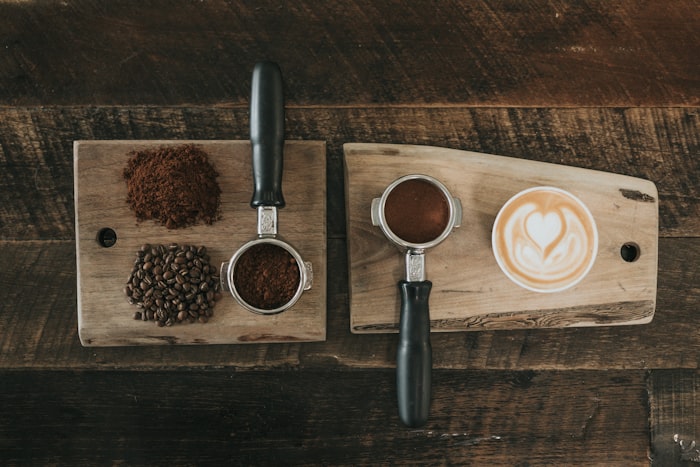
Beginner — RecommendedConcentrated coffee extracted quickly under high pressure. The base of lattes and cappuccinos.
IntermediateSmall, portable, forgiving. Can brew both espresso-style and filter-style. A great first brewer.
Beginner — RecommendedNow you know what you're looking for.
Ethiopia's floral notes or Colombia's balanced sweetness — start with whichever one you're curious about. Let's help you find your first coffee.